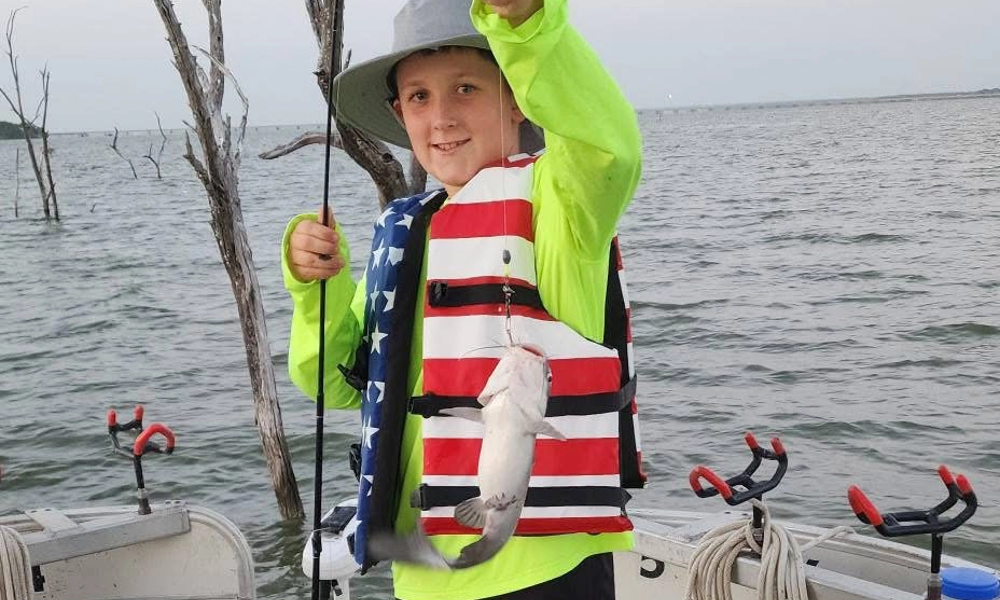
Channel catfish do not carry watches. The best time to catch them depends on what the fish are doing, where their food is located, water temperature, wind, cloud cover and the season.
That is especially important on Lake Tawakoni. This is a 37,879-acre reservoir with moderately stained water, considerable water-level fluctuation and an abundant catfish population. Texas Parks and Wildlife rates the lake’s catfish angling opportunity as excellent.
Quick Answer | Best Time to Catch Channel Catfish
The best time of day to catch channel catfish is usually early morning and late afternoon through evening, particularly during warm weather. After dark can also be excellent because channel cats often move shallower to feed. During the middle of the day, don’t quit fishing—move deeper and concentrate on creek channels, ledges, points and other areas where fish can find comfortable water and food.
The most important lesson is simple: follow the fish instead of the clock.
Why Channel Catfish Feeding Times Change
Channel catfish are opportunistic feeders. Their daily movements are influenced by available food, light penetration, water temperature, current, wind and seasonal conditions.
That makes a fixed rule such as “catfish only bite at night” misleading.
You can catch channel cats at 7 a.m., noon, 5 p.m. or midnight. What changes is where you should look for them and how you should present your bait.
Lake Tawakoni’s normal water clarity is moderately stained. The reservoir also contains areas of standing timber, emergent vegetation when lake levels allow it, creek systems and a variety of open-water structure.
Those characteristics give channel catfish plenty of options as conditions change.
Early Morning Is Hard to Beat
For much of the year, the first few hours after daylight are one of the best windows for channel catfish.
During warmer months, the water has cooled overnight. Low light can encourage fish to remain in relatively shallow feeding areas longer than they might under a bright midday sun.
Start by checking flats near deeper water, points, creek-channel edges and places where a shallow feeding area connects directly to a deeper escape route.
Wind can make a good area better.
A moderate wind pushing into a shoreline or across a point can move plankton, baitfish and other food. Instead of automatically searching for the calmest water on the lake, pay attention to the side receiving the wind.
If channel cats have been feeding shallow overnight, the morning period may provide an opportunity to intercept them before they move.
What Happens When the Sun Gets Higher?
One of the biggest mistakes in channel catfishing is assuming that a slower morning bite means the fish have stopped feeding.
They may simply have moved.
As sunlight gets stronger and the shallow water warms, channel cats can shift toward deeper water, creek channels, channel edges, ledges and other nearby structure.
This is where electronics become valuable.
Instead of spending an hour staring at an unproductive rod because that spot produced fish at daylight, use sonar to determine what is underneath the boat. Look for depth changes, channels, bait and fish positioned close to the bottom.
Finding a productive depth can matter more than finding one particular waypoint.
If you catch several channel cats at a similar depth, pay attention. That depth may tell you more about the day’s pattern than the exact location where you caught the first fish.
Yes, You Can Catch Channel Catfish at Noon
Channel catfish do not stop eating because the clock reaches noon.
Midday fishing simply requires anglers to recognize that fish may not be using the same water they occupied earlier.
On a hot, bright summer day, that can mean leaving a shallow flat and checking its nearest drop. A creek channel running alongside a feeding flat creates a natural travel route. Points extending toward deeper water can serve the same purpose.
Cloud cover can change the equation.
An overcast day reduces light penetration and may extend a shallow-water bite. Wind can also keep a shallow area productive longer by breaking up the surface and moving food.
Instead of thinking “noon is bad,” think about depth, light, temperature and food.
Late Afternoon Can Start Another Feeding Window
As the sun drops, conditions begin changing again.
Shallow water stops receiving the day’s strongest sunlight. Shadows get longer. Light penetration decreases. Fish that spent part of the day deeper may begin moving toward feeding areas.
This transition can make late afternoon and evening particularly productive.
Look at the same travel routes that mattered during the morning, but reverse the process. Creek channels, ledges and points can lead channel cats from deeper daytime holding areas toward shallower flats.
Don’t immediately run all the way to the bank.
Fish may stage along the first significant depth change before moving farther onto a flat. Work your way shallower until the fish tell you where they are.
Is Night the Best Time to Catch Channel Catfish?
Night fishing deserves its reputation, particularly during summer.
Channel cats can move shallower after dark, and anglers can find fish on flats and other feeding areas that were much less productive under bright afternoon conditions.
But nighttime is not magic.
A poor location remains a poor location after sunset. You still need food, fish and suitable conditions.
Start with areas that provide both feeding water and nearby depth. A flat adjacent to a creek channel is more attractive than an isolated shallow area with no obvious route to deeper water.
Night fishing also requires additional attention to boat positioning and safety. Lake Tawakoni covers nearly 38,000 acres, so navigation after dark should be deliberate. Know the area you intend to fish before darkness whenever possible.

Water Temperature Changes the Clock
The best time of day to catch channel catfish changes with the season because water temperature changes fish behavior.
Spring
Warming water increases activity.
Channel cats begin using shallower areas more frequently as the lake warms and food becomes available. Afternoon fishing can be surprisingly good during cooler portions of spring because several hours of sunshine may warm shallow water.
That is almost the opposite of a midsummer pattern.
Pay attention to shallow flats, creek arms, points and protected areas that warm faster than the main lake.
Summer
Summer makes timing more noticeable.
Early morning, evening and nighttime become attractive because anglers avoid the most intense heat and channel cats may spend more time feeding in accessible shallow areas during low-light periods.
When the sun gets high, adjust.
Rather than waiting for evening in an empty spot, use electronics and check deeper water associated with channels, drops and ledges.
Fall
Fall can produce excellent channel catfish action.
Cooling water changes baitfish movement and gradually removes some of the extreme temperature differences that influence summer fishing.
This is a good time to stay mobile and pay close attention to food.
When baitfish concentrate, predators usually aren’t far away.
Winter
Winter requires a different approach.
Channel cats remain catchable, but colder water slows metabolism and can concentrate fish into deeper areas. Stable weather and a well-placed bait can become more important than being on the water at sunrise.
Lake Tawakoni is also famous for its winter trophy blue catfish fishery, so anglers should identify their catch carefully. Channel and blue catfish are different species even though they frequently occupy some of the same water.
Wind Can Be More Important Than Time
Watch the wind forecast before you decide where to fish.
Wind creates movement in the water and can concentrate food along shorelines and across points. A windblown bank may look less comfortable to fish than protected water, but comfortable isn’t necessarily productive.
On Lake Tawakoni, stained water can make scent and bait presentation especially useful for channel cats.
Moderate wind can help.
Extreme wind is another matter. Lake Tawakoni is large enough to develop rough conditions. Fishing is never worth compromising boat safety.
Weather Can Change a Good Pattern Quickly
Cloud cover can extend productive feeding periods.
A shallow bite that ends shortly after sunrise on a clear August day might continue considerably longer under dark skies and moderate wind.
Rain and changing weather can also affect water clarity and runoff.
After significant rain, pay attention to creeks and areas receiving inflow. Moving water can introduce food, but heavily muddy water or rapidly changing conditions can also require fish to reposition.
Don’t assume yesterday’s depth will automatically be today’s depth.
Follow the Food
Channel catfish are built to locate food.
Lake Tawakoni supports a healthy shad population, and Texas Parks and Wildlife notes that anglers catch catfish there using cut bait, shrimp, liver, stink baits and earthworms. TPWD describes catfishing as one of Lake Tawakoni’s reliable fishing opportunities.
Prepared catfish bait is another effective approach for targeting channel cats because scent can help draw fish toward a stationary presentation.
Whatever bait you choose, freshness and presentation matter.
Check your bait regularly. If small fish have stripped the hook or your prepared bait is gone, you’re no longer fishing effectively.
Match Your Presentation to the Fish
Finding channel cats is only half the job.
If the fish are feeding aggressively, a bait positioned in the right zone may get hit quickly. When activity slows, small adjustments can make a difference.
Change depth before making dramatic changes to everything else.
If fish were active in 8 feet early and the bite stops as the sun climbs, check 10, 12 or 15 feet along the same structural feature before abandoning the entire area.
The same principle works in reverse during evening.
A depth change of only a few feet can put your bait back in front of active fish.
Use Electronics to Eliminate Empty Water
Modern sonar is particularly useful during the middle of the day.
You’re not necessarily looking for a screen completely covered with giant fish symbols. Look for the combination of structure, bait and fish activity.
Creek-channel bends are natural places to investigate. So are ledges, points and transitions where a flat meets deeper water.
Standing timber can also provide structure on Lake Tawakoni, although TPWD notes that flooded timber is scattered rather than abundant.
Spend more time fishing water that gives channel cats a reason to be there.
Boat Position Matters
Once you locate fish, position the boat so your bait remains in the productive zone.
This sounds obvious, but poor boat positioning costs anglers fish.
If channel cats are using the edge of a creek channel, don’t scatter every bait across unrelated depths. Put several presentations into the depth where you’ve actually marked or caught fish.
Then experiment around that depth.
One rod slightly shallower and another slightly deeper can help identify whether fish are moving.
When a pattern develops, tighten your spread around it.
Don’t Leave Fish to Find Fish
A common mistake is moving too quickly.
Channel cats can travel in groups, and a productive location may continue producing if bait and fish remain present.
On the other hand, sitting indefinitely without bites isn’t patience. It’s stubbornness.
Give a good location a reasonable opportunity. If your bait is fresh, your presentation is right and electronics show little activity, move.
Successful catfishing is a balance between patience and mobility.
The Best Time Changes With the Kind of Day
Imagine two July fishing days on Lake Tawakoni.
The first begins clear and calm. The sun rises quickly, temperatures climb and the lake becomes bright. An early shallow bite may fade rapidly, making deeper water more attractive by midmorning.
The second day is overcast with a moderate breeze.
Those fish may remain active in shallower water much longer.
Same lake. Same month. Completely different daily pattern.
That is why experienced anglers pay attention to conditions rather than relying on a single rule about the best channel catfish feeding time.
Keep Family Fishing Simple
Channel catfish are an excellent species for introducing kids to fishing.
You don’t need a complicated presentation to get started. Find a productive area, use a suitable bait, keep it where channel cats can find it and make sure young anglers can see or feel a bite.
Lake Tawakoni State Park provides access to the lake and has a four-lane boat ramp and fish-cleaning station. Texas Parks and Wildlife also notes that fishing gear can be borrowed at park headquarters, and anglers fishing from shore within a Texas state park do not need a fishing license.
That makes channel catfishing one of the more approachable ways to introduce someone to Lake Tawakoni.
Check Current Lake Tawakoni Catfish Regulations
Always verify current regulations before keeping fish.
Texas Parks and Wildlife identifies channel catfish as a game fish and maintains specific freshwater harvest regulations, including waterbody exceptions. Lake Tawakoni has had special channel and blue catfish regulations, so anglers should check the current Lake Tawakoni rules rather than assuming the general statewide limit applies.
Regulations can change between seasons. Checking them before the trip takes only a few minutes.
Lake Tawakoni Fishing Resources
Best Catfish Bait for Channel Catfish — Learn how different bait choices work when targeting channel catfish.
How to Fish Punch Bait for Catfish — A practical guide to rigging, presenting and fishing punch bait effectively.
Where to Find Channel Catfish in a Lake — Learn how channel catfish relate to flats, channels, structure, depth and seasonal conditions.
Bonus Resource
Texas Parks and Wildlife — Fishing Lake Tawakoni provides current information about Lake Tawakoni’s fishery, lake characteristics, access, fishing regulations, cover, structure and fishing tactics. It is worth checking before a trip because lake regulations and conditions can change.
Frequently Asked Questions
What is the best time of day to catch channel catfish?
Early morning and the final few hours before dark are consistently productive times for channel catfish, especially during warm weather. However, channel cats can be caught throughout the day when anglers adjust their depth and location.
Are channel catfish easier to catch at night?
Channel catfish often move into shallower water to feed after dark during warm months, making night fishing productive. Night is not automatically better than daytime because weather, wind, water temperature and bait location also influence feeding.
Can you catch channel catfish in the middle of the day?
Yes. Midday channel catfish often move deeper or hold near creek channels, ledges, points and other structure. Finding fish with electronics and adjusting depth can be more important than the time on the clock.
What weather is best for channel catfish fishing?
Cloud cover, moderate wind and stable or changing weather can produce good channel catfish fishing. Wind is especially useful because it can concentrate food and create productive areas along windblown shorelines, points and flats.
What is the best bait for channel catfish on Lake Tawakoni?
Channel catfish respond to several baits, including prepared catfish bait, cut bait, shrimp, liver, earthworms and other natural baits. Texas Parks and Wildlife specifically lists cut bait, shrimp, liver, stink baits and earthworms among the baits used for Lake Tawakoni catfish.
Where should I look for Lake Tawakoni channel catfish?
Start around creek channels, channel edges, flats, points, standing timber and other transitions. Windblown areas can also be productive when wind concentrates food and baitfish.
Best Time of Day to Catch Channel Catfish
The best time of day to catch channel catfish is generally early morning, late afternoon and evening, with nighttime becoming especially productive during warm summer weather. But there is no single hour when channel catfish suddenly start or stop feeding.
On Lake Tawakoni, anglers should let water temperature, sunlight, wind, weather and baitfish activity determine where they fish. Start shallower during low-light periods and investigate nearby creek channels, ledges, points and deeper structure when bright sunlight or summer heat pushes fish away from shallow feeding areas.
During spring, warming afternoon water can make later fishing productive. During summer, sunrise, sunset and nighttime often become more important. Fall brings cooling water and changing baitfish patterns, while winter generally calls for slower presentations and careful attention to depth.
Most importantly, don’t quit when a morning bite ends. Change depth, check your electronics, follow the food and keep fresh bait in productive water. The clock tells you what time it is. The conditions tell you where the channel catfish are.